This is the first of the three sequels to "2001 A Space Odyssey". Going by experience of his "Rendezvous with Rama" sequels, I avoided this one for quite a while. But this book is generally good.
There is a key change in continuing the narration from 2001: the mysterious alien artifact (TMA-2) is not on a satellite of Saturn, but is hanging in space between Jupiter & its innermost volcanic satellite Io. According to Clarke, this is to ensure this sequel is consistent with the original movie rather than original novel.
Story summary (spoiler).
It is convenient to look at this book as generally four stories - though they are far more tightly coupled than the stories of original 2001 were. Let me name them, for Clarke doesn't:
- International diplomacy & voyage to Jupiter
- Ghosts & gods
- Gods at Creation
- Europan (not European) gods
First story, international diplomacy & voyage to Jupiter, is the longest.
Americans are building a manned spaceship in earth orbit that will go to Jupiter, rendezvous with the spaceship Discovery left near the alien artifact in 2001 - to figure out what was known to that ship before contact was lost, & then again investigate the alien object for its secrets.
Russians are also building their own ship to investigate alien object. They missed out last time because Americans kept the secret to themselves for too long. And looks like they will end up finishing much faster than Americans.
Russians want American help to board Discovery, & to learn what is there in the data banks of that ship about aliens. Americans are not interested, till Russians come up with a trump card - Discovery is off orbit, & will fall into volcanic Io long before Americans can get there by their own efforts.
OK - so a Russian ship will go, with mostly Russian crew, but also 3 Americans - including the TMA expert, the man who programmed the robot (HAL 9000) that ran amok in 2001, & an engineer familiar with Discovery.
There is a silly part in voyage arrangements: Russians will travel normally, but Americans will travel in
hibernation. Why? I guess Clarke just wanted to introduce yet another technology into narration; story would only have been cleaner without it.
Anyway, the Russian ship is approaching Jupiter, & American TMA expert is woken up. They are quite close to Jupiter, when the first twist comes.
Chinese have also been building a ship headed towards Jupiter, & they have technology far ahead of either Americans or Russians. This Chinese ship, Tsien, comes from behind, overtakes our friends, circles Jupiter, & lands on its icy moon Europa.
Our friends figure out why - to pick up water as propellant. Only the Chinese have other designs - they cause a diplomatic stir on earth by claiming Europa as Chinese territory. It seems, because of easy accessibility & easy availability of water, Europa could be an important refueling station for deep space exploration.
But Chinese have something larger than them up against them. Turns out, Europa has life - though primitive - in liquid seas under its icy surface. One such life form - half tree, half animal - manages to destroy Chinese ship & kill the crew. The man last to die sends a detailed report.
OK - tangent taken care off, our men head for the target. Dumbbell-shaped Discovery is boarded, fixed, taken to a safe orbit above Io, & the robotic HAL is fixed. And it has no clues to TMA-2 sitting close by in space.
Oh - TMA-2 has been renamed by now. Americans call it Big Brother; Russians by some other name I cannot recall.
All observations & probing of TMA proves futile, as in 2001. Our friends watch with infinite patience. Until TMA opens momentarily & lets out a mysterious lit object that can only be called a UFO.
Hence begins the tale of ghosts & gods, the
second story. This is the worst part of the book, but thankfully it doesn't last long.
UFO is actually the American astronaut David lost in 2001 as he went into TMA, was taken for a ride by aliens, & turned into a pure energy being - a
star child. We are told he still retains some human emotions and attachments, & is being held tightly on leash by aliens that have their own ends in mind.
When the Russian ship relays the UFO information to earth, someone decides to prepare with a nuclear bomb. Star child quickly detonates it in earth orbit, killing a few on surface of earth, but human losses could have been worse.
Then there are some adventures of star child - on earth to old haunts of David that is no longer David, on Europa exploring the life forms in its seas, inside Jupiter right to its core that is solid diamond, we are told. There are graphic descriptions of living animals on Europa, & also on Jupiter.
Then begins the tale of Creation, & of kick-starting intelligent life by gods - the
third story. I was occasionally reminded of first story in 2001, & also of
Encounter at Down, but generally this is a different story.
Our friends on board Russian ship (that has now been joined with older American ship through a kind of tube) are losing patience. All efforts to map TMA are failing. So they are planning to do something drastic - like detonate a powerful device on TMA surface, but are wary of reaction from TMA to such hostile acts. They are awaiting the launch window - some 20-25 days hence, when they can begin their trip back home; doing otherwise would require more fuel that they don't have. Plan is to do these hostile acts just before setting out for earth.
Now our friendly ghost makes contact with the TMA expert. He warns him to leave within 10 days (or is it 15? I forget).
Shipmates are divided on the ghost version. Though the TMA expert has impeccable credentials & is in good health, the captain wants something more substantive. Over the days, the crew gets more & more divided - some in believing camp, others not believing, others on the fence. Situation is not helped by reports arriving from earth - of the exploits of the ghost there.
Russian captain has another headache - even if she agrees to leave, there is not enough fuel. But there is the brilliant American engineer on board. Old ship Discovery still has fuel. They will rig it as a booster stage rocket, use some help from Jupiter's gravity, & with some luck, can get home safely even outside the launch window.
And then comes the next twist in tale. One fine day, the TMA simply vanishes. Now even the unconverted are converted, & plans for return are finalized.
Another twist is cooking elsewhere. Astronomers from earth have observed a new anomaly on Jupiter's surface - looks like the shadow of a new moon! Just as our friends are about to leave, they get a request as to whether they can take some pictures.
Starting the trip back home involves many twists - including convincing HAL of the changed schedule. It is during this trip that the black plague on the Jupiter's surface is noticed by our friends. And it is spreading fast. It seems, TMA that vanished went to Jupiter, & has been making copies of itself by sucking up local materials. And it is growing fast.
Enter a conversation between ghost & now all alone HAL. Ghost convinces HAL to stop talking to retreating Russian ship, & instead relay a message to earth as many times as it can. The message is very brief, & is from gods to mere earthlings: all planetary bodies around are yours, except Europa; leave that alone. Looks like the gods have designs on Europan lifeforms, but consider Jovian lifeforms discardable!
This is when the explosion happens. It turns out the gods that control TMA are about to turn Jupiter into another Sun - by increasing its density, & starting the fusion reaction! The plan is: its heat will warm nearby Europa, & help evolution of intelligent life there. It will also make other moons of Jupiter, new called Lucifer in its sunny avataar, more habitable. These other moons will be gods' gift to mankind.
Incidentally, during this cataclysmic event, HAL became another star child while the old ship Discovery was destroyed.
So now there are two ghosts of earthly origin on the loose. Will likely help out in future sequels.Now begins the
final tale, the forth one. Of new intelligent beings just discovering their own gods. The year is no longer 2010. It is twenty thousand something. And the voices & opinions we hear are of the Europans. Some species there have just become conscious of the universe around, including their main sun Lucifer, & the little far sun. And of mysterious stars & lights moving around in the skies.
There is a little silly element that can be ignored. The beings described appear to be roughly at a stage of development that humans were some 30,000 years back, or perhaps slightly older ancestors. Anyway, the evolution on earth took some billion years to reach this stage from primitive animals; on Europa, this huge time has been compressed to just 20,000 years!
We are told humans have been probing Europan landing via unmanned probes for a long time, in spite of warning from gods. Every time their ship approaches, it explodes & is destroyed.
And yes, there is a TMA-3, on the surface of Europa, protecting its creatures from humans. Who will inherit the solar system - humans or Europans?
Enough hints of a sequel.
Fact sheet.
2010 Odyssey Two, novel, review
Author: Arthur C Clarke
Genre: Fantasy
First published: 1982
Rating: B
Hugo Award nominee in novel category in 1983
See also.
- "Space Odyssey series summary"
- "Influences" section of "Rescue Party"
- Another story by Clarke, from 1940s, titled "History Lesson" has a similar quick evolution on another world - even quicker than Europa.
- Humans create a sun out of Phobos, a moon of Mars, to terrafarm Mars in "The Sands of Mars".
- All Hugo Award stories.
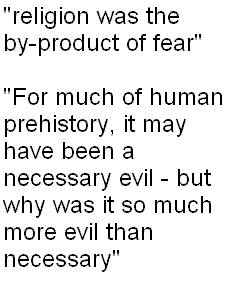 This book is almost entirely fantasy rather than science fiction. Except a few pages of rather reasonable philosophical discourse about mid-way through the book, & that too is borrowed from similar discourse in "The City & the Stars". And in spite of the finality of the title, the end of the story leaves a lot of scope for further sequels.


